
Former civil servants and rights activists have issued a "people's impeachment" notice demanding the resignation of Chief Election Commissioner (CEC) Gyanesh Kumar. They allege six charges against him, including undermining the Election Commission's functioning, mass disenfranchisement through Special Intensive Revision (SIR) of electoral rolls, and compromising political impartiality. The group, including G K Pillai and Najeeb Jung, was prevented from submitting the notice at the EC office.

The Supreme Court is set to hear a plea filed by Congress leader Rahul Gandhi and other opposition figures on Thursday regarding alleged large-scale voter deletions and irregularities in the Special Intensive Revision of electoral rolls. The petition seeks an independent audit of these deletions and modifications, and a direction to prevent further deletions without due process.

Two Delhi Police personnel, including a female Pink Force member, were injured during the detention of approximately 1,000 protesters across New Delhi district on Saturday, following a denied protest permission by the Cockroach Janta Party (CJP) against the Election Commission.

'I was just thinking about me, because my rights have been affected. That's it.' 'I am an ordinary citizen of this country, and I am expecting my rights (as a voter) to be restored.'

Rahul Gandhi has ignited a political storm by accusing Prime Minister Narendra Modi, Amit Shah, RSS chief Mohan Bhagwat, and CEC Gyanesh Kumar of "vote chori" and "treason".
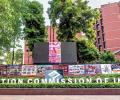
The Calcutta High Court criticised the Election Commission for reassigning the 'envelope' symbol to the Democratic Trinamool Congress, previously used by the ISF, for the Nandigram by-election. Justice Krishna Rao questioned the EC's fairness, especially when 183 free symbols were available, and adjourned the hearing until Friday.

Opposition parties in India are demanding the impeachment and arrest of Chief Election Commissioner (CEC) Gyanesh Kumar, alleging he is running the poll panel as a 'one-man autocracy' following revelations that two Election Commissioners red-flagged issues related to the Special Intensive Revision (SIR) of electoral rolls.

'Election Commissioners are Constitutional authorities and they are not supposed to go to the Cabinet secretary. They are not supposed to write letters. And if they are aggrieved, they should straight go to the President of India.'

The Supreme Court is set to hear pleas challenging Chief Election Commissioner Gyanesh Kumar's alleged unilateral decisions without the concurrence of other election commissioners. The petitions seek his suspension and question actions like altering voter registration forms and handling electoral roll revisions in Goa and West Bengal, highlighting concerns over the multi-member character of the Election Commission.

AISA national president Neha Bora was released at the Narela Industrial Area police station after being picked up during the organisation's protest march towards Jantar Mantar, with AISA members alleging procedural violations during her detention.
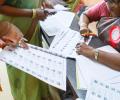
The Election Commission has announced a Special Summary Revision of electoral rolls in 17 states and Union territories, including those facing assembly polls next year. This initiative aims to enrol new voters, correct existing entries, and enhance the accuracy of voter lists, with January 1, 2027, set as the qualifying date.

The Election Commission of India has introduced a mandatory declaration for new voters, requiring them to provide parental details from the Special Intensive Revision (SIR) exercise. This move, aimed at streamlining voter mapping, has sparked controversy, with some Election Commissioners deeming it "illegal" and "unauthorised" due to potential negative impacts on young voters.

Former Supreme Court judge Justice Rohinton Fali Nariman has voiced serious concerns regarding the Election Commission's functioning, stating that the right to vote is 'at great peril'. He called for the Supreme Court's intervention to address 'disturbing developments' within the poll panel, particularly citing issues like voter disenfranchisement during electoral roll revisions and the controversial appointment process of Election Commissioners.

The Election Commission of India has announced decisions addressing concerns raised by two election commissioners, Sukhbir Singh Sandhu and Vivek Joshi, over the past 10 months. These issues included changes to voter registration forms, access to the electoral roll database, the handling of Goa's 97 voters, communications issued without full commission approval, oversight of the IT division, and appeals against voter restoration. The EC has provided responses and outlined steps to resolve these internal disputes and improve transparency and compliance.

The Supreme Court has agreed to hear a plea challenging Section 16 of the 2023 election law, which grants immunity to the Chief Election Commissioner and Election Commissioners from civil and criminal proceedings for actions taken in their official capacity. This provision is being contested as unconstitutional, with petitioners arguing it provides "unprecedented, unbridled power" and blanket immunity for life.

Trinamool Congress leader Saket Gokhale has accused the Election Commission of India (ECI) of withholding details about the software and algorithm used for the Special Intensive Revision (SIR) of electoral rolls. Citing an RTI response, Gokhale highlighted the ECI's claim that the information relates to "commercial confidence, trade secrets and intellectual property matters," raising concerns about transparency in the electoral process.

The Election Commission of India has introduced new restrictions on the number of Form 7 applications an individual can submit, both online and offline. This move aims to prevent bulk or malicious attempts to remove legitimate voters from electoral rolls and streamline the objection process, especially after reports from states like Karnataka and Odisha.

The DMK has launched a strong attack on Congress leader Rahul Gandhi, questioning his silence on alleged voter deletions in Tamil Nadu and accusing him of inconsistency regarding electoral roll revisions. This comes amidst a broader campaign by the INDIA bloc against the Election Commission over the Special Intensive Revision (SIR) process.

Union minister Chirag Paswan criticised the Opposition for playing politics with protests against the Election Commission, particularly regarding the Cockroach Janata Party's planned demonstrations and the resulting train cancellations. He asserted that such disruptions cannot deter India's youth and urged the Opposition to seek solutions rather than merely protesting.
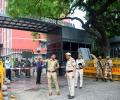
The article details a history of internal disagreements among Election Commissioners in India, highlighting instances from 1993 to the present, including clashes between CECs and commissioners over various issues like removal recommendations, dissent notes, and affidavits, culminating in recent objections regarding voter list revisions.

The Cockroach Janta Party (CJP) organised a protest in Mumbai, demanding the resignation of Chief Election Commissioner Gyanesh Kumar, despite police denying permission. The protest stems from alleged objections by other Election Commissioners regarding electoral roll decisions, though the Election Commission clarified all decisions were unanimous. Security forces were heavily deployed around Shivaji Park to manage the situation.
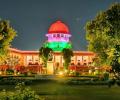
The Supreme Court has questioned the reliability of legislative majority as the sole determinant for political party ownership, especially when disqualification proceedings are pending against the very legislators forming that majority. This query arose during arguments concerning the Shiv Sena faction dispute between Eknath Shinde and Uddhav Thackeray.

The Election Commission of India (ECI) has announced a revised schedule for the Special Intensive Revision of Maharashtra's electoral roll, pushing the final publication date to November 16, 2026. The period for filing claims and objections has also been extended.

The Election Commission has removed an additional declaration related to the Special Intensive Revision (SIR) from the online voter enrolment Form 6 in states where the SIR process is complete. This decision follows internal objections from Election Commissioners Sukhbir Singh Sandhu and Vivek Joshi regarding changes to the form and the process. The EC maintains the declaration was SIR-specific and not an amendment to Form 6 itself.

The Supreme Court has directed the Election Commission to resolve the contentious dispute between the rival factions of the All India Trinamool Congress over its party name and crucial 'flowers and grass' election symbol within three months of the completion of pleadings.

The Supreme Court resumed hearing pleas challenging the Maharashtra Speaker's decision regarding the Eknath Shinde-led Shiv Sena MLAs and the Election Commission's recognition of the Shinde faction as the "real" Shiv Sena. Senior advocate Neeraj Kishan Kaul, representing the Shinde camp, argued that the EC has jurisdiction under Article 324 to examine a party's democratic character and organisational structure, especially when the Thackeray faction's constitution was not registered with the poll panel. He emphasised that the Shinde faction's case is based on a split within the political party, not just its legislative wing, citing cadre discontent. The hearing remains inconclusive.

CJP founder Abhijeet Dipke, YouTuber Dhruv Rathee, and actor-activist Prakash Raj joined a protest in Bengaluru, demanding the scrapping of the electoral roll revision exercise and the resignation of Chief Election Commissioner Gyanesh Kumar, alleging widespread voter deletion aimed at disenfranchising specific groups.

The Congress party staged nationwide protests, demanding the immediate arrest and removal of Chief Election Commissioner Gyanesh Kumar. The party accused the Election Commission of an "unprecedented attack" on voter equality through an alleged 'Mark VIP' feature and called for an independent review of decisions made under Kumar, citing objections from other commissioners regarding the Special Intensive Revision (SIR) of electoral rolls.
The Election Commission has clarified that its ECINet platform is decentralised, with statutory functions performed only by designated officials, not headquarters staff. This comes after concerns were raised about the centralisation of electoral roll databases. The EC also defended the legality of an additional declaration sought from new voters during the Special Intensive Revision, citing unanimous commission approval and a Supreme Court judgment.

The Congress party has demanded the resignation of Chief Election Commissioner Gyanesh Kumar, alleging "vote chori" and treason, following a media report revealing that two other Election Commissioners had formally objected to decisions regarding the Special Intensive Revision of electoral rolls. Rahul Gandhi and Mallikarjun Kharge have accused the BJP, RSS, and EC of undermining democracy, citing concerns over voter list tampering and lack of transparency.

Rahul Gandhi has convened a high tea for INDIA bloc MPs to discuss a strategy for joint protests against alleged "vote theft" and to demand the resignation of Chief Election Commissioner Gyanesh Kumar. This meeting follows a "March for Democracy" by opposition leaders and activists to the Supreme Court, where they filed a petition challenging alleged poll irregularities.
Opposition parties are planning a third attempt to move a motion for the removal of Chief Election Commissioner Gyanesh Kumar in both the Lok Sabha and Rajya Sabha. This renewed effort follows an Indian Express report highlighting objections from two other Election Commissioners regarding decisions made without their knowledge, particularly concerning voter registration and electoral roll management.

Maharashtra's Chief Electoral Officer has formally requested the Election Commission to modify the ECINet software, seeking greater discretion for Electoral Registration Officers in addressing over 2 crore voter discrepancies.

The Election Commission of India has defended its Special Intensive Revision (SIR) of voters' lists, asserting that differing views among Commissioners are a normal part of deliberations and all orders carry full legal sanction, following reports of two Commissioners red-flagging issues.
A petition has been filed in the Supreme Court challenging Chief Election Commissioner Gyanesh Kumar over alleged statutory duty violations and the controversial deletion of 13 crore voters during the Special Intensive Revision of electoral rolls, claiming decisions were made without the concurrence of other election commissioners.

Former West Bengal Chief Minister Mamata Banerjee has filed a plea in the Supreme Court challenging the Election Commission's interim decision to freeze the Trinamool Congress' name and party symbol. The EC had allotted separate names and symbols to two rival TMC factions ahead of upcoming bypolls, a move Banerjee has strongly criticised as a "black day" for democracy.
The Supreme Court stated it has not approved any modifications to Form 6, used for electoral roll inclusion, during the Special Intensive Revision. This observation came during the hearing of a Public Interest Litigation (PIL) challenging alleged unilateral decisions by the Chief Election Commissioner regarding changes to Form 6 and electoral roll revisions in states like Goa and West Bengal, without the concurrence of his colleagues. The court issued notice on the plea, highlighting concerns over collective decision-making within the Election Commission.

A Ganesh Nadar's close encounters with the Election Commission.

A group of 124 former IAS, IFS, IPS, and allied services officers have issued an open letter defending the Election Commission (EC) and the Special Intensive Revision (SIR) process. They argue that the electoral system cannot be deemed rigged only when a party loses, citing instances where the ruling BJP lost elections under the same EC. The officers highlight the legitimacy and necessity of the SIR for cleaning voter rolls and underscore the robust safeguards within India's electoral system.

The Supreme Court has issued notices to the Election Commission and the Centre regarding pleas alleging that the poll body made several decisions without the approval of the two election commissioners. The court stated it would annul any decisions found not to be in accordance with the law, while also refusing an interim order to restrain CEC Gyanesh Kumar from making decisions.
